
AFFILIATE DISCLOSURE
This post may contain affiliate links. An affiliate means Escribr may earn referral fees if you make a purchase through our link without any extra cost to you. It helps to keep this blog afloat. Thanks for your support!
Did you know that by visiting this blog, you are doing good in the world? READ THIS.
You finish the project. The client is happy. The invoice gets sent and paid.
And for a second, it feels like you’ve made it, like everything’s finally working.
Then you check your account and something’s off.
Not a little off.
Hundreds of dollars just gone.
No warning. No explanation. Just quietly taken before it even touched your hands.
The worst part is you probably didn’t even question it because nobody tells you this when you start freelancing.
They tell you how to find clients.
They tell you how to price your work.
They tell you how to scale.
But they don’t tell you that the platform you use to get paid can silently drain thousands from you every single year.
And here’s where it gets uncomfortable.
Most freelancers aren’t underpaid. They’re just leaking money in places they never think to look.
So in this blog post, we’re breaking down exactly where that money is going, which platform is quietly taking the biggest cut and which one actually let you keep what you earn.

Because choosing the wrong doesn’t just cost you a few dollars. It can completely kill your margins without you even realizing it.
And once you see it, you won’t unsee it.
The Lie Freelancers Believe
Here’s the lie almost every freelancer believes at the start, that making more money is all about getting more clients.
So you spend hours improving your skills, tweaking your portfolio, and sending proposal after proposal.
And don’t get me wrong—that stuff matters. But there’s a layer nobody talks about, because while you’re focused on earning more, you’re quietly losing a percentage of everything you already make.
Every payment.
Every invoice.
Every single transaction.
Just small enough to ignore but big enough to stack up fast.
And the crazy part is that two freelancers could charge the exact same rate, do the exact same work, get paid the exact same amount, and one of them walks away with way less.
Not because they’re worse, but because their system is.
That’s the real game nobody explains. It’s not just about how much you charge. It’s about how much you actually keep.
And once you start paying attention to that, you realize the problem isn’t always your income. It’s the invisible cuts happening behind the scenes.

But where exactly are those cuts coming from?
PayPal: The Convenience Trap
For most freelancers, this is where it all begins…
PayPal.
It’s familiar. It’s trusted. And most importantly, your clients already have it, which means no friction, no back and forth, no explaining new systems.
You send the invoice, they click a button, and boom—you’re paid.
And when you’re just starting out, that convenience feels like everything because getting paid fast feels better than getting paid perfectly.
But here’s where things start to get a little uncomfortable.
That “easy” payment is not cheap. Not even close. Because behind that smooth checkout, there’s a stack of fees quietly eating into your money.
First, the base cut. Then, the international fee. And then the currency conversion. And that’s the one that really hurts because you don’t control it.
You don’t choose the rate. You don’t decide when it happens. And you definitely don’t get the best deal. It just happens in the background.
And suddenly, a payment that looked like $5,000 doesn’t feel like $5,000 anymore. It feels noticeably smaller.
And here’s the part most people don’t realize until it’s too late.

It’s not one big loss. It’s death by a thousand tiny cuts.
Every client.
Every month.
Every year.
And the more you earn, the more you lose.
But convenience has a way of keeping people stuck because even when you know it’s expensive, it still feels easier than switching.
So most freelancers just accept it until they finally see how much it’s actually costing them.
And when they do, they start looking for something better.
Wise: The Freelancer Upgrade
This is usually the moment freelancers start leveling up, when they realize, “Wait, there has to be a better way than this.”
And that’s where Wise enters the picture.
At first glance, it doesn’t look flashy. No hype. No aggressive marketing.
Just one simple promise — transparency.
And that alone already puts it ahead of most platform because instead of hiding fees inside bad exchange rates, Wise shows you exactly what you’re paying upfront.
No guessing. No surprises. No weird “why is this amount lower?” moments.
And the biggest shift is they use the real exchange rate, the same one you see on Google, which means you’re no longer getting quietly shaved off every time money moves between currencies.

Now suddenly, those international payments feel fair.
And it doesn’t stop there. You can hold multiple currencies in one account, get local bank details in different countries, and receive payments like you actually live there.
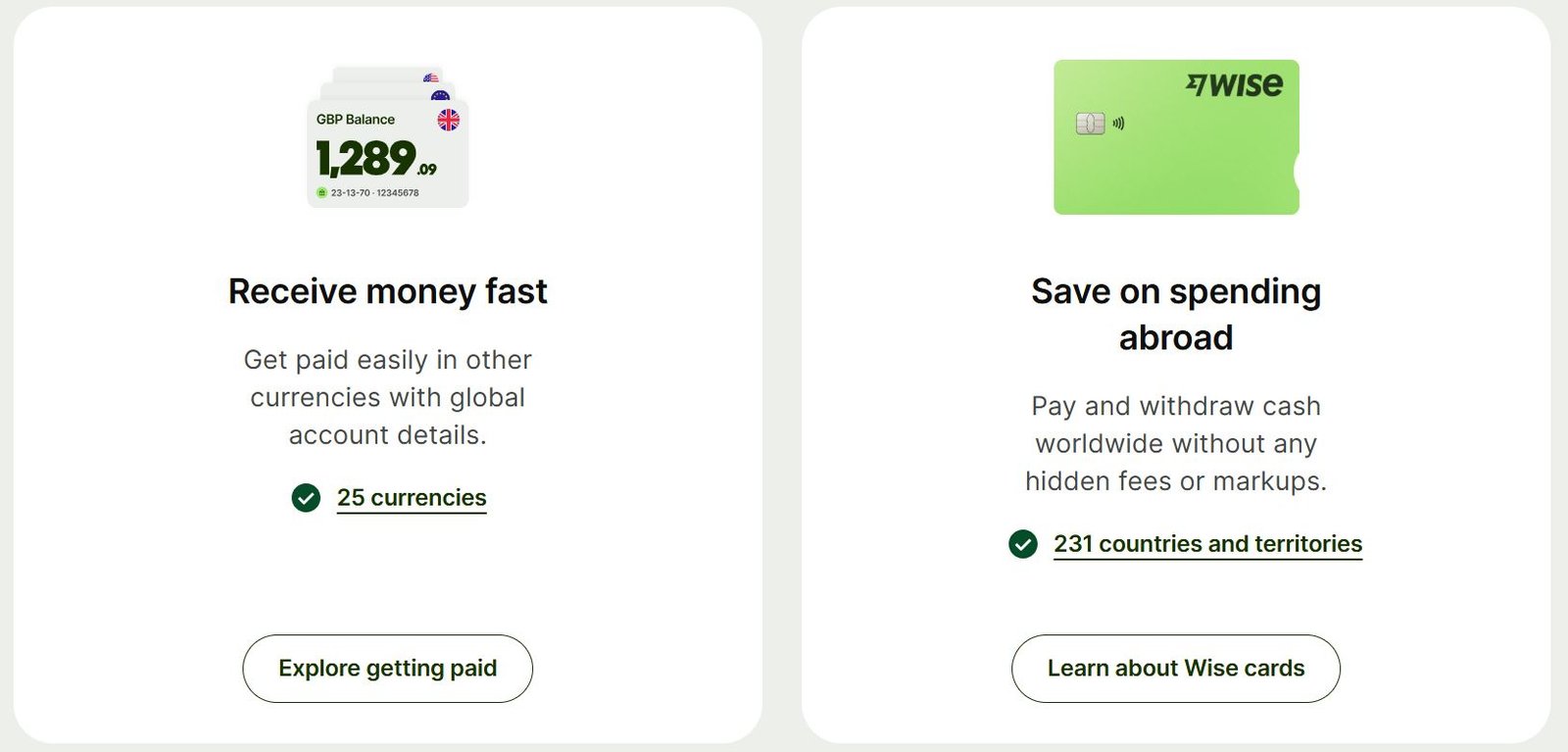
So instead of your client thinking, “This is an international transfer, “ it feels like a local payment.
Faster for them and cheaper for you, so everyone wins.
This is why so many freelancers switch and never look back. Because for the first time, you actually feel in control of your money.
Wrap-Up
At the end of the day, this is simple.
PayPal is easy but expensive. Wise is still easy just way smarter.
You keep more of what you earn, you understand every fee, and you stay in control of your money.
And that alone can make a bigger difference than landing one extra client.
So if you’re still using PayPal as your main platform, it might be time to rethink that.
Switch to Wise, test it out, and see how much you actually keep.
Then come back and tell me—how much were you losing without even realizing it?