Get Paid to Post on Facebook
Discover the 5-step system for earning money on Facebook by posting text, photos, videos, and reels.
See How It Works →AFFILIATE DISCLOSURE
This post may contain affiliate links. An affiliate means Escribr may earn referral fees if you make a purchase through our link without any extra cost to you. It helps to keep this blog afloat. Thanks for your support!
Did you know that by visiting this blog, you are doing good in the world? READ THIS.
If you can type accurately and listen carefully, you may already have the two most important skills needed to earn money as a transcriptionist — from anywhere in the world, on your own schedule. Online transcription jobs from home have grown significantly over the past decade, fueled by the explosion of podcasts, video content, legal proceedings, telehealth services, and remote business meetings. Every hour of audio and video content recorded needs to be converted into written text, and there is no shortage of demand. The global transcription services market was valued at over $25 billion in 2024 and is projected to grow steadily through the end of the decade, according to industry research firm Grand View Research.
Yet most guides on this topic barely scratch the surface. They list a few job types, mention a handful of platforms, and leave you with more questions than answers. This guide is different. By the time you finish reading, you will know exactly which transcription jobs exist, which ones pay the most, which platforms are worth your time, what tools and skills you need, and how to land your first paid assignment — even if you have never done this before.
What Are Online Transcription Jobs, and Are They Still Worth Pursuing?
Online transcription involves listening to audio or video recordings and converting the spoken content into accurate written text. The recordings can come from almost any industry: healthcare, law, journalism, entertainment, academia, market research, corporate communications, and more.
The “from home” aspect is one of the field’s biggest draws. Since the entire workflow — receiving audio files, producing transcripts, and delivering finished documents — happens digitally, transcription is genuinely location-independent. You need a computer, a reliable internet connection, a good pair of headphones, and the ability to type.
But is it still worth pursuing in 2026, given the rise of AI transcription tools? The short answer is yes — with important nuance.
Automated transcription tools like Otter.ai, Whisper, and Rev AI have improved dramatically. They handle clean, single-speaker audio reasonably well. But they still struggle with accents, technical terminology, overlapping speakers, poor audio quality, legal formatting requirements, and medical vocabulary. Human transcriptionists are routinely hired to review, correct, and format AI-generated drafts — a role that is actually growing, not shrinking. Platforms now call this “transcript editing” or “QA transcription,” and it tends to pay nearly as well as transcribing from scratch because it requires judgment, not just typing speed.
The transcriptionists who thrive today are those who specialize, build speed and accuracy, and position themselves where AI still falls short.
The 7 Main Types of Online Transcription Jobs (and What Each Pays)
Understanding the landscape is the first step toward finding work that fits your interests and income goals. Here are the seven most common types of online transcription roles available to remote workers.
1. General Transcription
General transcription is the broadest category and the most accessible entry point. Projects come from podcasters, journalists, researchers, YouTubers, corporate trainers, and anyone else who needs audio converted to text without specialized formatting or industry-specific vocabulary.
Typical pay ranges from $0.45 to $1.25 per audio minute on major platforms, or $15 to $30 per hour for experienced freelancers working directly with clients. Entry-level general transcriptionists typically earn $12–$18 per hour until they build speed.
Best for: Beginners, people building their portfolio, those who want variety.
2. Medical Transcription
Medical transcription involves converting physician dictations, patient encounter summaries, operative reports, discharge notes, and other clinical recordings into structured medical documents. This role requires a strong grasp of medical terminology, anatomy, pharmacology, and healthcare formatting standards.
While electronic health records (EHR) systems have automated some documentation, healthcare providers still need human review of voice-to-text drafts, particularly for complex cases or specialty practices.
Pay is higher than general transcription: $0.75 to $1.50 per audio minute, or $18 to $40 per hour for experienced specialists. Many medical transcriptionists complete a certificate program (typically 6–12 months) to become competitive. The Association for Healthcare Documentation Integrity (AHDI) offers recognized credentials through their registered healthcare documentation specialist (RHDS) and healthcare documentation specialist (HDS) designations.
Best for: People with a medical background or strong interest in healthcare who want higher-paying, specialized work.
3. Legal Transcription
Legal transcription covers court proceedings, depositions, attorney dictations, hearings, and law enforcement interviews. Accuracy is paramount — legal transcripts can be used as evidence, entered into official records, or referenced during trials.
Legal transcriptionists must be familiar with legal terminology, courtroom procedures, proper citation formats, and confidentiality obligations. Many states have strict rules about who can produce official court transcripts (those are court reporters, not transcriptionists), but the broader legal transcription market — including attorney notes, client meetings, and deposition review — is fully accessible to remote contractors.
Pay ranges from $1.00 to $2.00 per audio minute, with experienced legal transcriptionists earning $25 to $50+ per hour as direct freelancers.
Best for: People with a legal background, paralegals seeking supplemental income, or detail-oriented individuals willing to learn legal vocabulary.
4. Captioning and Subtitling
Captioning means transcribing spoken audio and syncing it with video content using timestamps, so the text appears on screen in time with the speech. This is distinct from standard transcription because the output must be formatted as a timed caption file (commonly in .SRT or .VTT formats).
Demand is surging because accessibility legislation in many countries now requires captions on video content, and social media platforms prioritize captioned videos in their algorithms. Clients include video production companies, e-learning platforms, broadcast networks, government agencies, universities, and individual content creators.
Pay is generally $0.75 to $1.25 per audio minute for offline captioning, and significantly higher for live (real-time) captioning, which requires stenography skills. Some platforms like Vitac and 3Play Media hire remote captioners and provide training.
Best for: People who enjoy media and video content, and those who want to combine transcription skills with a social mission around accessibility.
5. Market Research Transcription
Market research firms, consultancies, and brands frequently conduct focus groups, consumer interviews, and feedback sessions that need to be transcribed for analysis. These recordings often feature multiple speakers, overlapping dialogue, informal conversation styles, and occasional background noise — making them poor candidates for automated transcription.
This niche tends to offer project-based work with faster-than-average turnaround requirements. Pay is generally on par with general transcription, but volume can be high during active research cycles.
Best for: Those comfortable handling multi-speaker audio and who want consistent project flow.
6. Academic and Research Transcription
Universities, think tanks, nonprofit organizations, and independent researchers hire transcriptionists to document interviews, oral histories, field recordings, and conference presentations. The content can range from straightforward interviews to highly technical discussions in STEM or social science fields.
Researchers value thoroughness and formatting consistency over speed. Pay varies widely, but academic contracts can be lucrative when negotiated directly — particularly for ongoing research projects.
Best for: People with academic backgrounds or subject-matter expertise in a particular field who can offer specialized knowledge alongside transcription skills.
7. AI Transcript Editing (The Emerging Opportunity)
This is the fastest-growing niche in the transcription world right now. Platforms and businesses use automated transcription tools to produce a rough first draft, then hire human editors to review it for accuracy, catch misidentified words (especially proper nouns, technical terms, and accents), correct formatting, and ensure readability.
This role requires sharp editing instincts and an ear for language more than raw typing speed. It pays slightly less per audio minute than full transcription but can be done faster — making the effective hourly rate competitive. Platforms like Scribie, Verbit, and Otter.ai have incorporated human review layers into their workflows.
Best for: Experienced transcriptionists or skilled editors who want faster throughput.
Top Legitimate Platforms for Online Transcription Jobs (Currently Hiring in 2026)
With so many platforms out there, it can be difficult to separate the legitimate opportunities from the time-wasters — and even harder to know which ones are actually accepting new freelancers right now. The transcription industry has consolidated significantly, and some formerly popular platforms have paused hiring or shut down entirely as AI has reshaped the market. Here is an honest, up-to-date breakdown based on current hiring status as of mid-2026.
GoTranscript — ✅ Actively Hiring
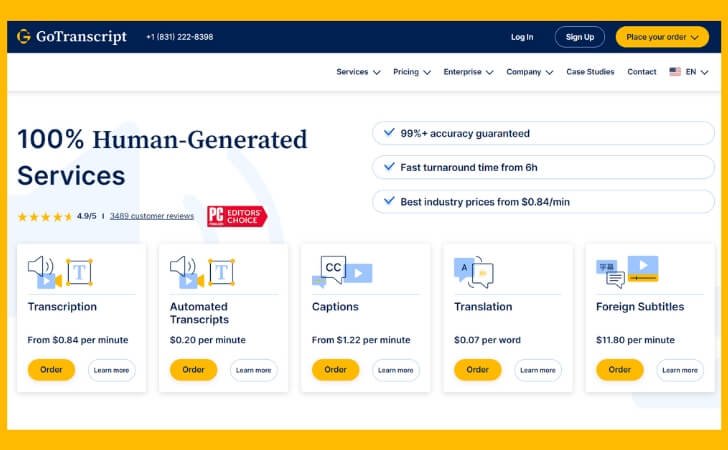
GoTranscript is one of the strongest options right now. The platform has publicly announced that hiring is fully open as of 2026, with several major projects launching through the middle of the year covering over 130 languages worldwide. Founded in Edinburgh in 2005, GoTranscript operates a 100% human-powered workflow — no AI drafts to clean up — which means more consistent work volume for freelancers.
Pay is up to $0.60 per audio minute (around $36 per audio hour) for English transcription, with top earners reportedly bringing in over $1,200 per month. The platform hires worldwide with no prior experience required, and payments are processed weekly via PayPal. If you are bilingual, GoTranscript also offers translation and subtitling work, which broadens your earning potential considerably. Note that the platform has occasionally moved to a waitlist during high application volume, so applying sooner rather than later is advisable.
Best for: Beginners and intermediate transcriptionists worldwide; bilingual workers seeking translation income too.
3Play Media — ✅ Actively Hiring (Best Pay Rates)
3Play Media is widely considered the gold standard for freelance transcription work in terms of pay and working conditions. The company serves over 10,000 clients in education, media, and enterprise, and hires editors to review and correct AI-generated drafts — a model that rewards accuracy and language skill over raw typing speed.
Pay is not publicly listed but is reported by contractors to be three to four times higher than most competing platforms, with estimated effective hourly earnings of $20–$30+. The platform pays weekly, provides its own proprietary editing interface (reviewed favorably by contractors), and offers growth paths into quality assurance, audio description, live captioning, and translation. The application requires passing a skills test, and US-based applicants must pass a background check.
Best for: English and Spanish transcriptionists with solid editing instincts who want the highest pay rates on a dedicated platform.
TranscribeMe — ✅ Actively Hiring (Best for Beginners)
TranscribeMe remains one of the most beginner-friendly options available. The platform breaks audio into very short clips — often under a minute — so you are never overwhelmed by a long, complex file. This crowdsourced approach makes it easy to fit work around any schedule and lets newcomers build speed and confidence quickly.
Starting pay is $15–$22 per audio hour, which is modest but comes with a genuine growth path: experienced transcriptionists who pass specialist exams can access “Special Teams” focused on medical or legal transcription, with reported earnings of $60–$70 per audio hour — among the highest on any platform. Average monthly earnings are around $250 for part-time workers, though high-performers reach $2,200. Payments are processed via PayPal.
Best for: Absolute beginners who want a low-pressure entry point; experienced workers willing to earn credentials for the higher-pay specialist tiers.
Rev — ⚠️ Open But Often Waitlisted
Rev is the most recognizable name in freelance transcription and is still accepting applications — but with important caveats. The platform frequently has more applicants than available work, so new applicants are often placed on a waitlist that can extend response times significantly. Additionally, Rev does not accept freelancers from California due to state regulatory requirements.
Unlimited Transcription.
No Per-Minute Charges.
Transcribe as many podcasts, interviews, meetings, lectures, and videos as you need—without counting minutes or worrying about extra fees.Get fast, editable AI transcripts with speaker labels, summaries, timestamps, and flexible export options, all in one simple plan.
Start Transcribing Without Limits →The role has also shifted considerably: Rev now relies heavily on AI-generated first drafts, with human freelancers editing and correcting those drafts rather than transcribing from scratch. Pay ranges from $0.30 to $1.10 per audio minute depending on project difficulty, with most freelancers reporting realistic monthly earnings of $100–$250 for part-time effort. Rev pays weekly via PayPal and lets you choose your own projects from a marketplace with no minimum commitment.
Rev is worth applying to for the flexibility and name recognition, but do not treat it as a primary income source. The realistic hourly rate for newer freelancers after accounting for the time ratio is relatively low.
Best for: People who want maximum flexibility and variety; those who want to supplement income from other platforms rather than rely on Rev alone. Not available to California residents.
GMR Transcription — ✅ Actively Hiring (US Only)
GMR Transcription has been operating since 2004 and hires US-based transcriptionists only (excluding California and a few other states with restrictive freelance laws). The company uses 100% human transcription and serves clients in legal, medical, academic, and corporate sectors.
Pay ranges from $0.75 to $1.00 per audio minute, making it one of the better-paying general transcription platforms available to American workers. GMR requires you to pass a typing test (minimum 50 WPM at 90% accuracy), own over-the-ear headphones, a foot pedal, and have Microsoft Office. Monthly earnings for active contractors are reported to range from $1,000 to $3,000.
Best for: US-based transcriptionists (outside California) who can meet the equipment requirements and want above-average pay for general transcription work.
Daily Transcription — ✅ Accepting Applications (US/Native English)
Daily Transcription serves the entertainment, corporate, legal, and academic industries and hires native English-speaking transcriptionists based in the US. The company positions itself as a higher-quality alternative to crowdsourced platforms, and pay reflects that: $0.75 to $1.10 per audio minute, with Reddit users reporting more supportive project management compared to larger platforms.
The application process is selective, but for US-based workers with solid skills, it is worth pursuing alongside one of the more accessible platforms above.
Best for: US-based native English speakers who want better pay and a more professional working environment than entry-level crowd platforms.
CastingWords — ⚠️ Open But Proceed with Caution
CastingWords is technically still accepting freelancers through their Workshop portal and claims to always be hiring. However, experienced transcriptionists on forums and review platforms consistently flag significant concerns: a punitive grading system that can lock workers out of better-paying assignments, very low starting rates ($0.30–$1.00 per audio minute), and a steep learning curve with a lengthy style guide that must be memorized to avoid having work rejected.
It is listed here for completeness, but for most people — especially beginners — GoTranscript, TranscribeMe, or 3Play Media offer a far better experience for similar or higher pay.
Best for: Workers who have already exhausted other options and want additional volume; not recommended as a first choice.
Scribie — ⛔ Hiring Paused
Scribie paused hiring of new home transcriptionists while undergoing a platform transition, a status that has been confirmed as recently as early 2025. The platform continues to operate as a service for clients, but is not currently taking new freelancer applications. Worth bookmarking in case hiring resumes, but do not count on it for near-term income.
Direct Freelancing (Upwork, Freelancer, Fiverr)
Beyond dedicated platforms, freelance marketplaces offer significant opportunities for transcriptionists willing to market themselves. On platforms like Upwork and Fiverr, experienced transcriptionists regularly charge $25–$75+ per audio hour because they work directly with clients rather than through an intermediary taking a large commission. Building a direct client base takes longer but offers substantially higher earning potential.
Essential Skills for Online Transcription Jobs (And How to Develop Them)
Typing Speed and Accuracy
The most fundamental skill in transcription is typing — not just quickly, but accurately. A typical conversational audio clip plays at 100–150 words per minute. If you type at 40 WPM with 95% accuracy, you will spend an enormous amount of time correcting errors. Aim for at least 65 WPM with 98% accuracy before taking paid work.
Free tools like Keybr, Typing.com, and 10FastFingers offer targeted practice. Spend 15–20 minutes daily for a month and most people see a significant improvement.
Active Listening
Transcription is as much about listening as typing. You must catch muffled words, speaker changes, non-verbal cues like laughter, foreign phrases, background interruptions, and spoken corrections. Practice by transcribing difficult audio — podcasts with multiple guests, recordings with background noise, or speakers with strong accents — even before you take paid work.
Research and Vocabulary
You will regularly encounter names, places, brands, specialized terms, and acronyms you are unfamiliar with. Developing a habit of quick, efficient research is critical. Transcriptionists who work in specialized niches (medical, legal, technical) invest time in learning the vocabulary of those fields.
Grammar, Punctuation, and Style
Transcription is not just typing what you hear — it is producing a readable document. You must make decisions about punctuation, paragraph breaks, capitalization, and how to handle informal speech. Brush up on grammar fundamentals if needed. Resources like the Chicago Manual of Style (for general transcription) and the AHDI Book of Style (for medical transcription) are industry standards.
Time Management and Self-Discipline
Remote transcription work is self-directed. You receive a file, a formatting guide, and a deadline. No one will check on your progress. Developing a consistent work routine, using time-tracking tools, and setting realistic daily output goals are habits that separate successful remote transcriptionists from those who struggle.
Tools You Need to Get Started
The barrier to entry for transcription is genuinely low. Here is what you need:

Computer or Laptop: Any modern computer capable of running a browser and a word processor will work. A solid-state drive (SSD) and at least 8GB of RAM help if you work with large audio files.
Headphones: High-quality headphones make a real difference when audio quality is poor. Over-ear headphones with noise isolation (such as the Sony MDR-7506, a professional standard) help you catch words that would otherwise be missed. In-ear models also work; the key is consistent, clear audio reproduction.
Transcription Software: Free options like oTranscribe (browser-based, excellent for beginners) and Express Scribe (Windows/Mac, with foot pedal support) allow you to control audio playback — including slowing it down — while typing in the same interface. Many platforms provide their own player.
Foot Pedal (Optional but Recommended): A USB foot pedal lets you pause, rewind, and fast-forward audio using your feet, keeping your hands on the keyboard. This dramatically improves productivity. The Infinity IN-USB-2 is a popular and affordable option. Most transcription software supports foot pedals natively.
Text Expansion Software: Tools like PhraseExpress or AutoHotkey let you create keyboard shortcuts for frequently typed phrases — particularly useful in medical or legal transcription where the same terminology appears repeatedly.
A Quiet Workspace: Background noise affects your ability to hear audio clearly. Even a quiet room with the door closed makes a meaningful difference to your accuracy and output.
How to Get Your First Online Transcription Job: A Step-by-Step Plan
Many people get stuck reading guides like this one without actually starting. Here is a concrete, week-by-week plan to go from zero to first paid assignment.
Week 1: Build Your Foundation Test your current typing speed and accuracy using a free tool. Spend 20 minutes daily on typing practice until you hit at least 65 WPM with strong accuracy. Download oTranscribe and practice with free audio from YouTube or public podcasts. Try transcribing a 10-minute clip and evaluate yourself.
Week 2: Choose Your Niche and Learn the Standards Decide whether you want to start with general transcription (fastest path to income) or invest in learning a specialty (medical, legal). If general, review style guides and formatting expectations. If medical, begin studying basic medical terminology using a free resource like Merriam-Webster’s Medical Dictionary or a community college continuing education course.
Week 3: Apply to Platforms Apply to at least two or three platforms simultaneously. Rev, TranscribeMe, and Scribie all have relatively quick onboarding tests. Treat the test transcripts seriously — they determine your starting tier. Set up your PayPal account for payment processing.
Week 4: Complete Your First Projects and Optimize Accept beginner-level projects to build your accuracy score on the platform. Track your time carefully so you know your actual hourly rate. Identify common error patterns — specific sounds you miss, formatting mistakes you repeat — and address them.
Months 2–3: Increase Volume and Rates Once you have an accuracy track record, apply for higher-tier assignments or begin building a direct client profile on Upwork or Fiverr. Even modest rate increases from $15 to $25 per audio hour double your income for the same number of hours worked.
How Much Can You Realistically Earn from Home Transcription Jobs?
Earnings vary based on your speed, accuracy, niche, and whether you work through platforms or directly with clients.
| Level | Situation | Estimated Hourly Earnings |
| Beginner | Platform work, general transcription | $10–$15/hour |
| Intermediate | Faster typing, higher accuracy tier | $18–$25/hour |
| Specialist | Medical or legal transcription | $25–$45/hour |
| Expert Freelancer | Direct clients, niche expertise | $35–$75+/hour |
One important note: transcription earnings are often quoted in “per audio minute” or “per audio hour” rates, which can be misleading. A one-hour audio file does not take one hour to transcribe — for an average typist, it takes three to four hours. When evaluating a platform’s pay rate, always convert to an effective hourly rate based on your realistic transcription ratio (typically 3:1 or 4:1 for beginners, 2:1 for experienced transcriptionists).
Red Flags to Avoid: How to Spot Transcription Scams
The work-from-home sector attracts scammers, and transcription is no exception. Protect yourself by knowing the warning signs:
Upfront fees: Legitimate transcription platforms never charge you to join or to access work. Any platform that asks for registration fees, training fees, or equipment purchase requirements (from them) is a scam.
Unrealistic pay claims: Promises of $50–$100 per hour for basic transcription work with no experience required are almost always false. Credible platforms are transparent about typical earnings.
No contact information or opaque ownership: Legitimate platforms have clear websites, contact details, and verifiable business registration. Search for the company name plus “review” or “scam” before applying.
Checks or money order payments: Any platform that pays by physical check or money order rather than PayPal, direct deposit, or a digital payment system is a red flag.
Stick to well-reviewed platforms, search for independent reviews on sites like Reddit’s r/transcription community and Trustpilot, and trust your instincts.
Medical Transcription From Home: A Deeper Look
Because medical transcription is one of the highest-paying home-based transcription niches, it deserves additional attention.
Training and Credentials
You do not legally need a formal credential to work in medical transcription, but most employers and clients expect one. The most respected path is the RHDS (Registered Healthcare Documentation Specialist) or HDS credential offered by the Association for Healthcare Documentation Integrity (AHDI).
Community colleges and online programs like the one offered through Andrews University or Career Step provide accredited medical transcription training, typically taking six months to a year to complete. Expect to invest $1,000–$3,000 in training.
The AI-Assisted Model in Healthcare
Modern medical transcription increasingly involves reviewing and editing AI-generated drafts rather than transcribing from scratch. Systems like Nuance’s Dragon Medical One (used by many healthcare systems) produce automatic drafts that medical transcriptionists — now often called Healthcare Documentation Specialists (HDS) — review, correct, and finalize. This makes the work faster and the per-document pay competitive with traditional transcription rates.
Confidentiality and HIPAA
Medical transcriptionists working in the United States must comply with HIPAA (Health Insurance Portability and Accountability Act) regulations. This means secure handling of audio files and transcripts, use of encrypted storage and transmission, and signed business associate agreements (BAAs) with healthcare clients. Most legitimate healthcare transcription companies walk you through their compliance requirements during onboarding.
Building a Transcription Career: Long-Term Growth Paths
Transcription is not just a gig — it can be a foundation for several related careers.
Proofreading and Editing: Many transcriptionists naturally transition into proofreading or copy editing work, especially if they develop a strong eye for language and grammar.
Captioning Specialist: Dedicated captioners with speed and accuracy can earn premium rates from media companies, broadcasters, and education platforms.
Translation and Transcription: If you are bilingual, combining transcription with translation dramatically expands your client base and rate potential.
Transcription Business Owner: Some experienced transcriptionists build small agencies, outsourcing work to a team of contractors while managing client relationships and quality control.
Scopist: Court reporters often hire scopists — specialized editors who review and correct stenographic transcripts — and this is a field where skilled transcriptionists often have a natural advantage.
Frequently Asked Questions About Online Transcription Jobs
Do I need a degree to become a transcriptionist? No. General transcription requires no formal degree. Medical and legal transcription benefit from specialized training or credentials, but these are certificates, not four-year degrees. What employers value most is demonstrated accuracy, consistent delivery, and relevant vocabulary knowledge.
How fast do I need to type? Aim for a minimum of 65 WPM before taking paid work. Most experienced transcriptionists type at 80–100 WPM. Speed matters because your effective hourly earnings depend on how quickly you can process audio.
Unlimited Transcription.
No Per-Minute Charges.
Transcribe as many podcasts, interviews, meetings, lectures, and videos as you need—without counting minutes or worrying about extra fees.Get fast, editable AI transcripts with speaker labels, summaries, timestamps, and flexible export options, all in one simple plan.
Start Transcribing Without Limits →Is transcription good as a side hustle vs. a full-time career? Both are viable. As a side hustle, transcription offers genuinely flexible hours — you work when you want and stop when you want. As a full-time career, it requires consistent effort, specialization, and direct client development to reach income levels that support full-time living comfortably. Many transcriptionists do both: use a platform like Rev for supplemental income while building a direct client base for primary income.
Can I do transcription on a tablet or phone? Technically possible, but not practical. The multi-window workflow of transcription — audio player and text document simultaneously — and the typing volume required make a laptop or desktop strongly preferable.
What is the difference between transcription and closed captioning? Transcription produces a text document. Closed captioning produces the same content formatted with timestamps so text appears on screen synchronized with video. Captioning requires additional software knowledge and time-code management, but pays at similar or slightly higher rates.
Conclusion: Is Transcription Right for You?
Online transcription jobs represent one of the most accessible, legitimate, and genuinely flexible remote income opportunities available in 2026. The work is skill-based rather than credential-based, the barrier to entry is low, demand is consistent across multiple industries, and the earning potential scales meaningfully when you specialize and work directly with clients.
The people who succeed in transcription share a few common traits: they type accurately at a reasonable speed, they pay close attention to detail, they manage their time well without supervision, and they are willing to invest in a specialty rather than staying at the lowest-paid general tier indefinitely.
If those traits describe you, there is real earning potential here — whether you are looking for a side hustle that fits around a busy schedule, a bridge income during a career transition, or a genuine long-term remote career.
The AI transcription revolution has not eliminated the human transcriptionist. It has changed the role — and in many cases, created even more demand for skilled human review and quality assurance. The professionals who adapt to that shift and combine human judgment with the efficiency of AI-assisted tools are the ones who will thrive.
Your Next Step
The fastest way to find out whether transcription is right for you is to try it — not with a paid course, but with a free practice session right now.
Here’s what to do today:
- Visit oTranscribe.com — it’s a free, browser-based transcription tool that requires nothing to download or install.
- Find any podcast or YouTube video that interests you and spend 20–30 minutes transcribing a segment of it.
- Check your accuracy against the audio and note where you struggle (speed, punctuation, specific sounds).
- Then head to GoTranscript and complete their free application test.
You could receive your first paid project within a week. The only thing standing between you and your first transcription paycheck is actually starting.